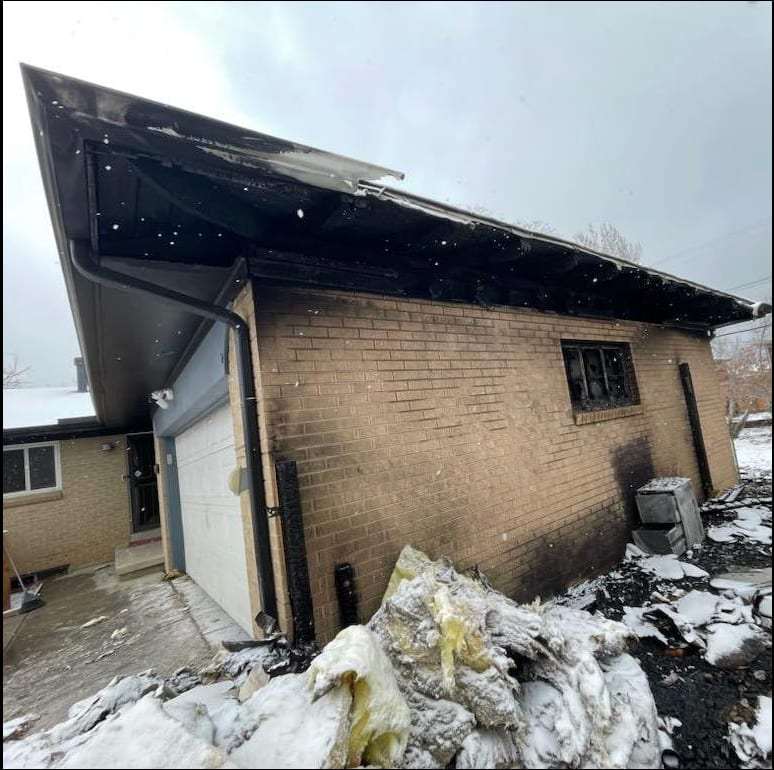
Fire-damaged brick house with debris in the snow. This photo illustrates the topic and is not from any address mentioned on this page.
Why the main house is often involved
Many Park Hill lots follow the older Denver pattern: house toward the street, backyard, detached garage on the alley. Garages hold the things most likely to start or feed a fire: vehicles, gas cans, paint, lithium batteries, lawn equipment and old wiring that may never have been updated. Garages built decades ago sometimes have a single overloaded circuit running freezers and tools.
When a garage burns, radiant heat travels across the yard. Vinyl and wood siding can melt or char, window glass on the back of the house can crack, and wood porches and decks can catch. Smoke drifts toward the house and slips in through open windows, attic vents and gaps around old doors. Embers can land on roofs and in gutters.
Alleys also bring neighbors into it. The garage next door, a shared fence or a neighbor's utility pole may be affected, and fire department access along a narrow alley can mean equipment crosses yards.
What to check on the house
- Exterior surfaces facing the garage.Look for melted or warped siding, blistered paint, cracked or crazed glass and scorched trim. Check eaves and soffits, where heat collects.
- Roof and gutters.Look for ember burns in shingles and debris in gutters. Ask a roofer to inspect if the roof faces the garage.
- Attic and vents.Gable and soffit vents near the garage side can pull smoke into the attic.
- Rooms on the back side.Kitchens, back bedrooms and enclosed porches usually get the most smoke. Check closets and soft furnishings for odor.
- Utilities.Overhead electric lines often run along the alley. Have Xcel Energy check the service drop if lines or the mast were exposed to heat.
For the claim
General information for Park Hill, not a quote or professional advice. In an emergency, call 911.