Why plaster behaves differently from drywall
Most Park Hill houses built before the 1940s have interior walls made of wood or metal lath covered in two or three coats of plaster. That system is heavier and harder than gypsum board, and its painted surface is far less porous than the paper face on drywall. Soot often sits on top of the paint rather than soaking into the core.
That is the main reason a sound plaster wall can frequently be cleaned, sealed and repainted after a smoke event where a drywall wall in the same position might be cut out. Paper-faced drywall wicks water and holds odor in its facing; plaster usually does not.
Plaster has its own weak points, though. It relies on keys, the bits of plaster that squeezed through the gaps in the lath and hardened, to stay attached. Intense heat, the shock of cold hose water on a hot wall, or days of soaking can break those keys. A wall that looks fine can be quietly loose behind its face.
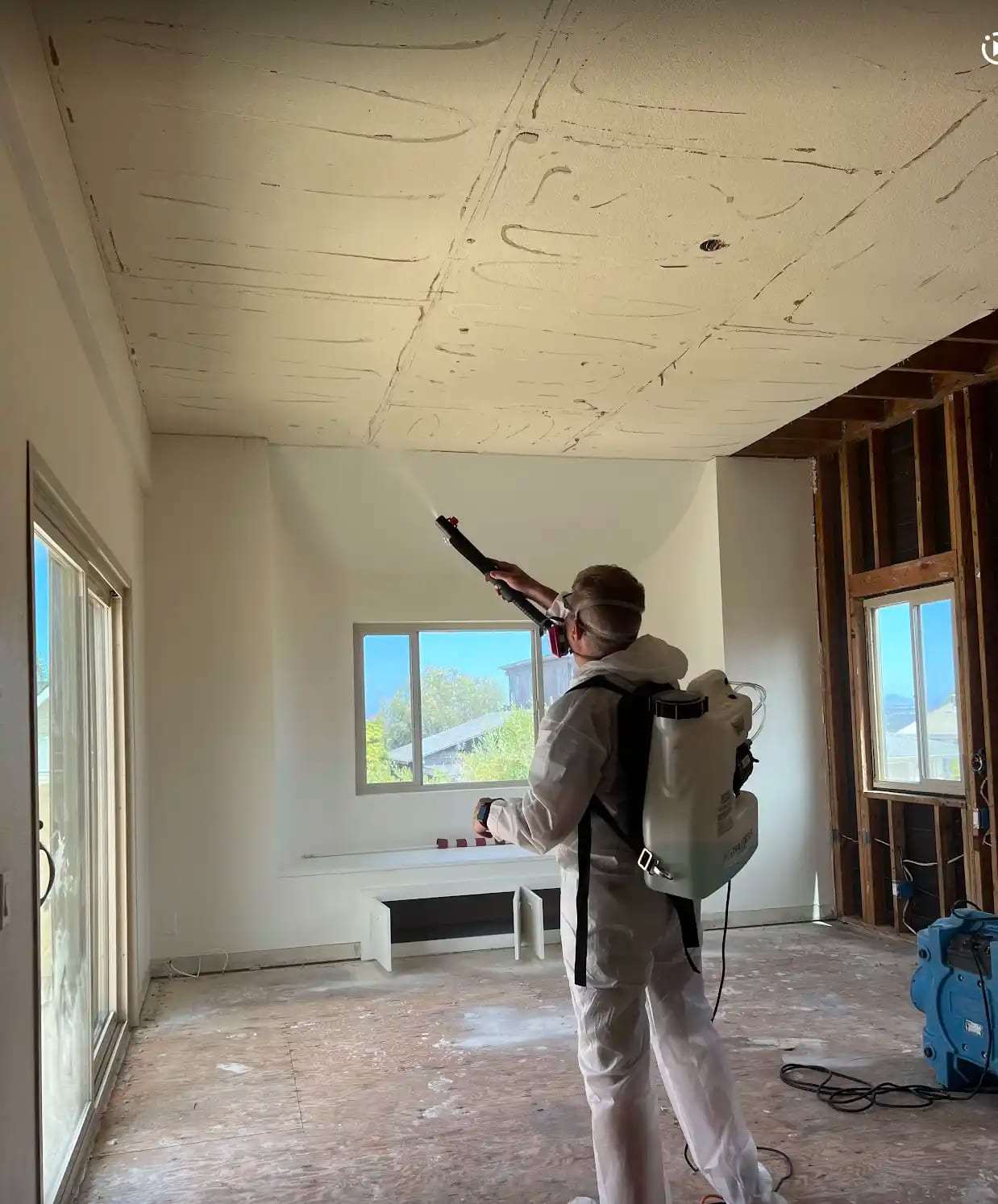
Technician with a backpack sprayer treating a room stripped to the framing. A general example of this kind of work, not a photo of a particular home, business or job.
Signs that point one way or the other
No single sign settles it. Look at the pattern across a wall or ceiling.
Usually worth cleaning and sealing
- Soot on the surface that lifts with a dry chemical sponge test
- Paint intact, no blistering or bubbling
- Wall feels solid when pressed gently with a flat hand
- No sagging in ceilings and no new cracks radiating from corners
- Wet areas that dry out without staining through or softening
Usually needs repair or removal
- Charring, scorched lath visible through cracks, or calcined, chalky plaster
- Ceiling plaster that bows, drums when tapped, or has dropped chunks
- Soft, crumbly plaster after prolonged soaking
- Wide cracks that open and close when pressed
- Odor that persists from inside the wall after surface cleaning
Matching the repair to the damage
- IfLight soot on sound plasterDry-sponge or vacuum first, then wet-clean with a suitable cleaner, seal with an odor-blocking primer and repaint.
- IfSound plaster with localized cracksClean, then have a plasterer secure loose areas with plaster washers or adhesive injection and skim the cracks before priming.
- IfA ceiling is sagging or detached over a large areaTreat it as a safety hazard and keep people out of the room. Removal or overlay with new board is common for failed ceilings.
- IfPlaster is charred or lath is burnedThat section generally comes out. Ask whether the patch will be new plaster, veneer plaster or drywall shimmed to match thickness.
Before you agree to remove a plaster wall
General information for Park Hill, not a quote or professional advice. In an emergency, call 911.