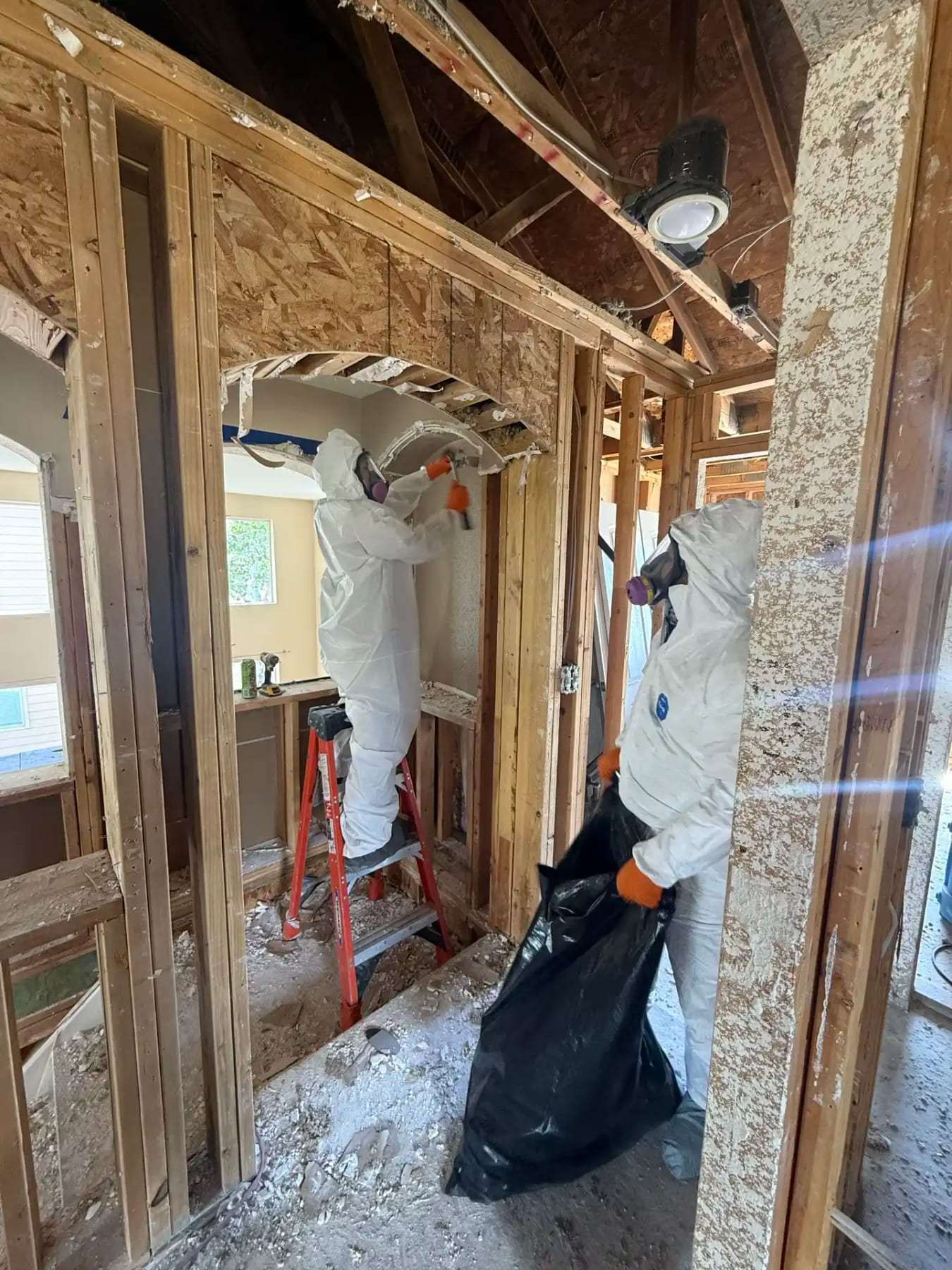
Technicians in protective suits removing debris from an attic opened to the framing. A general example of this kind of work, not a photo of a particular home, business or job.
Why this shows up after fires
Vermiculite is a mineral that expands into light, pebble-like granules when heated. For decades it was poured between attic joists as insulation, and much of what was sold in the United States came from a mine near Libby, Montana, that was contaminated with asbestos. Older Park Hill homes that were insulated or re-insulated mid-century may still have it, sometimes buried under newer fiberglass or cellulose.
Smoke rises into attics and settles on whatever insulation is there. Firefighters may also have opened the ceiling or roof to ventilate. The result is a smoky attic that clearly needs attention, filled with material that should not be disturbed casually. Ordinary insulation removal methods can spread fibers into the house below, especially through ceiling cracks and light fixtures.
Testing a vermiculite sample is not always conclusive, because fibers can be unevenly distributed. That is one reason many owners and contractors choose to treat it as asbestos-containing and have it removed under proper controls if the attic needs work.
Common paths forward
- IfAttic was not affected by smoke or waterLeaving vermiculite undisturbed and sealing ceiling penetrations may be reasonable. Note it in your records.
- IfAttic needs cleaning, new insulation or framing repairHire a Colorado-certified asbestos professional to assess and, if needed, remove it before other trades go up there.
- IfCeiling below has holes from firefightingKeep the room closed off. Vermiculite may have fallen into living space and that debris should be handled as suspect.
- IfInsurance questions removal costAsk the adjuster to put in writing whether removal required by the fire repair is covered, and check your policy's pollutant and ordinance terms.
How the attic work typically sequences
- Inspection and sampling.A certified inspector looks at the attic and takes samples, or the owner decides to treat it as asbestos-containing.
- Abatement.Licensed abatement removes vermiculite with containment and negative air, following Colorado regulations overseen by CDPHE.
- Smoke cleanup and framing repair.With insulation gone, rafters and sheathing can be cleaned, sealed or replaced as needed.
- New insulation.Fresh insulation goes in after odor has been addressed, so it does not trap smell in the attic.
Common questions
What does vermiculite look like?
Small, lightweight, accordion-like granules, usually gray-brown, silver or gold. It pours like coarse sand and often sits between joists below newer insulation.
Can smoke odor in vermiculite be treated in place?
Treating it in place risks disturbing it and is rarely effective at the depth smoke reaches. Removal by an abatement contractor is the usual route when the attic needs work.
General information for Park Hill, not a quote or professional advice. In an emergency, call 911.