Why the roof shape matters
Park Hill's Tudor Revival and cottage-style houses are recognizable from the street by their steep front gables, tall chimneys, and roofs that sweep low over entries. Those features make the houses distinctive and make roof work after a fire more complicated.
Firefighters often open the roof to vent heat and smoke, and fire that reaches the attic can burn through sheathing and rafters. On a low-slope ranch, a crew can usually walk the roof to tarp it. On a steep Tudor roof, workers need roof anchors, harnesses or lifts, and tarps must be secured over valleys, dormers and chimneys where wind and snow can work them loose.
Many of these houses have had several roofs over the decades. Under the current shingles there may be older layers, original skip sheathing boards, or materials that need testing before they are torn off.
From emergency cover to permanent roof
- Temporary protection.Tarp or board over openings so snow and rain stay out. Ask that tarps be anchored without nailing through areas that would otherwise be saved.
- Structural review.Check rafters, ridge and sheathing from the attic. Charred framing may need replacement or sistering; heat-weakened members may not look damaged.
- Test before tear-off.Older roofing layers, felt and some flashing materials may need asbestos sampling before removal.
- Choose matching materials.Decide whether the repair covers one slope or the whole roof. On a visible front slope, mismatched shingles stand out.
- Permits and inspection.Roof replacement and structural repairs in Denver generally need a permit. Ask about landmark review if the house is designated.
What drives the size of the roof repair
- Factor
- Pitch and access
- Why it matters on a steep, older roof
- Steeper roofs require more safety equipment and slower work
- Factor
- Number of layers
- Why it matters on a steep, older roof
- Multiple old layers add tear-off and disposal effort
- Factor
- Original sheathing
- Why it matters on a steep, older roof
- Spaced boards may need new decking under modern shingles
- Factor
- Valleys, dormers, chimneys
- Why it matters on a steep, older roof
- More flashing details to rebuild and seal
- Factor
- Matching
- Why it matters on a steep, older roof
- Discontinued colors or materials can push repair to whole slopes
- Factor
- Attic damage
- Why it matters on a steep, older roof
- Charred rafters or ridge add framing work before roofing
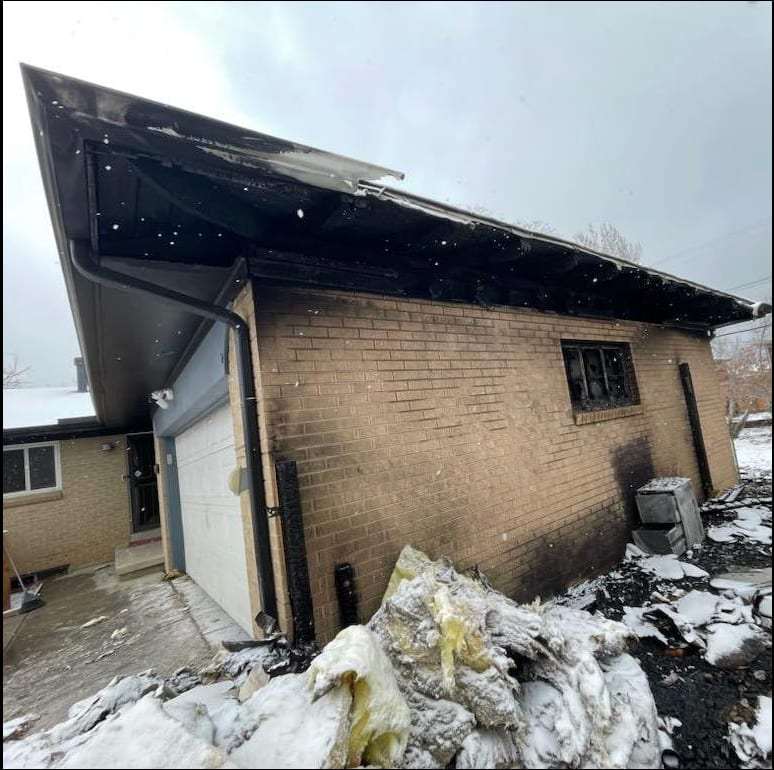
Fire-damaged brick house with debris in the snow. A representative photo of the task, not a record of work at any particular property.
Common questions
How long can a tarp stay on a steep roof?
Tarps are meant to be temporary. Colorado wind, hail and heavy spring snow can tear them loose or let water in, so check them after storms and push to get the permanent roof scheduled once the structure has been assessed.
General information for Park Hill, not a quote or professional advice. In an emergency, call 911.